Current Section 179 Construction Equipment Rules for Deere Buyers

Section 179 on construction equipment lands in 2026 only if the machine is ready for its job by Dec 31. Plus the $4,090,000 phase-out math and state gaps.
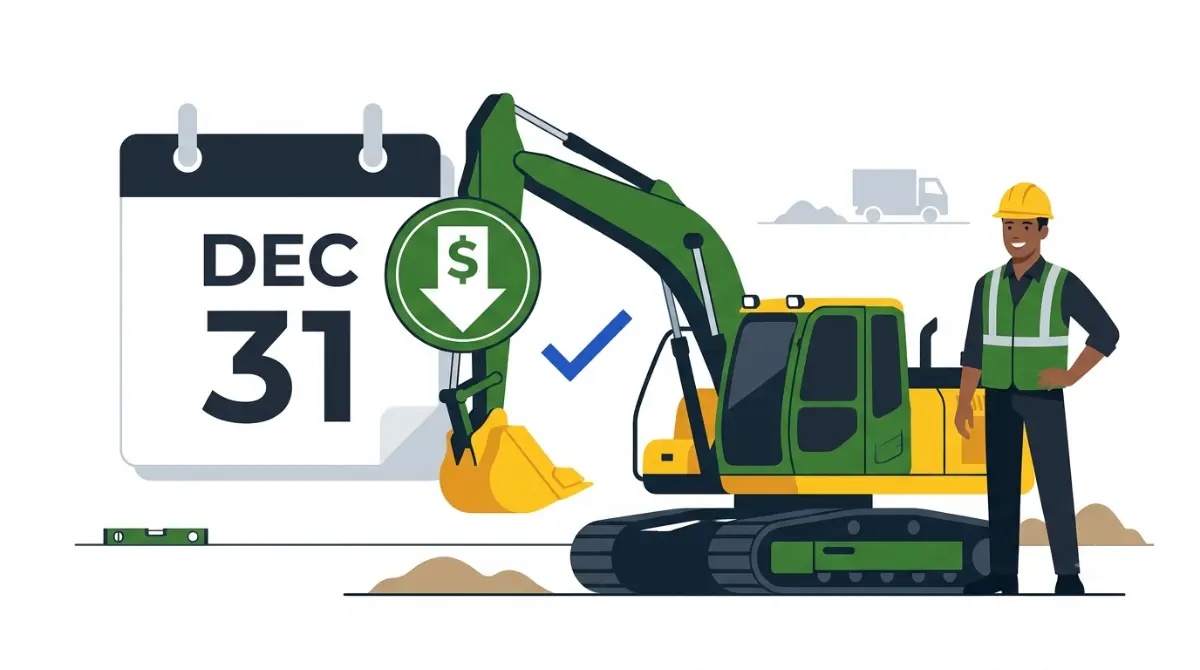
Table of Contents
Section 179 limit for construction equipment in 2026
| 2026 Section 179 figure | Amount | Applies To |
|---|---|---|
| Maximum deduction | $2,560,000 | Tax years beginning in 2026 |
| Phase-out begins (total §179 property placed in service) | $4,090,000 | Tax years beginning in 2026 |
| Deduction reaches $0 | $6,650,000 | Tax years beginning in 2026 |
Source: IRS Publication 946, “What’s New for 2026”; Rev. Proc. 2025-32 §4.24. Verified October 17, 2026.
The 2026 numbers
A Section 179 deduction lets a business expense up to $2,560,000 of qualifying machines placed in service in 2026, per IRS Publication 946. Every dollar of qualifying property above $4,090,000 cuts that cap by one dollar.
Is there a Deere-specific rule?
No. A Deere excavator follows the same Section 179 rules as any other qualifying machine. The brand and the dealer’s financing arm change nothing.
Go straight to:
- Buying one or two machines: Sections 2 and 3
- Placing over $4 million in service this year: Section 4
- Filing in California, Indiana or New Jersey: Section 6 first
- Trading in an older unit: Section 7
📜 The Rule: IRC §179(b), as amended by P.L. 119-21 (July 4, 2025) and inflation-adjusted by Rev. Proc. 2025-32. Verified October 17, 2026. The IRS publishes next year’s figures each fall; 2027 numbers will be added here once released.
ℹ️ Safety Note: The risk on this page is financial. Missing the in-service date, claiming more than your business income allows, or carrying the federal figure onto a state return that caps it can produce back taxes, recapture income and penalties. This is general information, not tax advice; have a CPA or enrolled agent review the purchase before you sign.
Which Deere machines qualify: new, used, financed
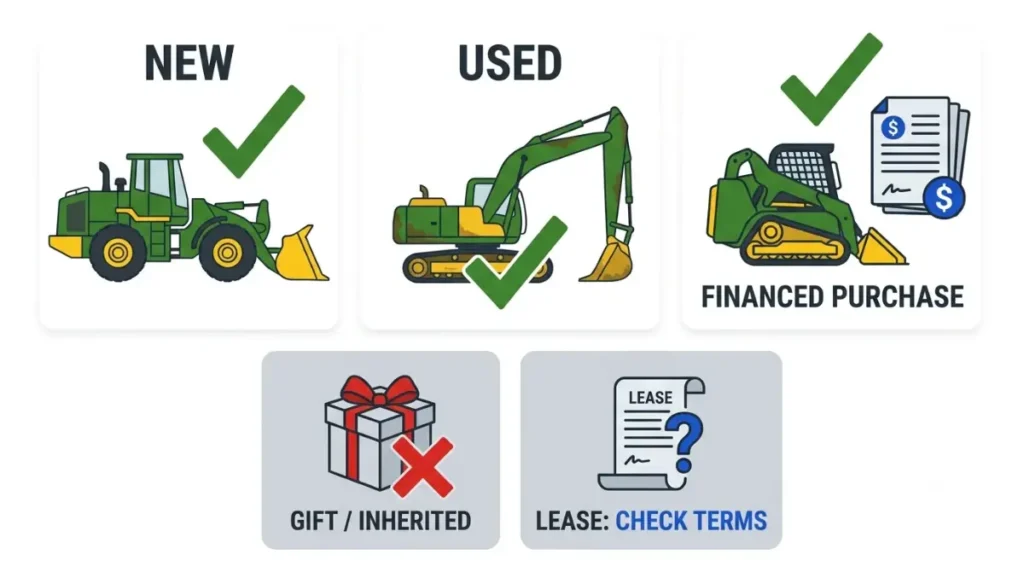
Section 179 covers construction equipment bought for use in an active business, whatever the brand.
New and used machines
Both qualify. A used loader counts the same as a new P-Tier if you bought it, rather than inherited it or received it as a gift. It also can’t come from a related party as Publication 946 defines one.
Financed through John Deere Financial
An installment contract is still a purchase; how you pay doesn’t change eligibility. Leases are different. Whether a lease counts as a purchase depends on its terms, so get it classified before relying on the deduction.
The 50% business-use rule
The machine must be used more than 50% for business in the year it’s placed in service. Sizing the unit still comes first; Deere dozer weights by model helps there. Heavy SUVs and pickups carry separate caps and aren’t covered here.
✅ Do This: Ask your CPA or enrolled agent two questions: “Is my contract a purchase or a lease for Section 179?” and “Does anyone related to my business own the seller?”
“Placed in service” by Dec 31: what actually counts
Under Treasury Reg. §1.179-4(e), a machine is placed in service when it is first ready and available for its specifically assigned job, per the Treasury definition of placed in service. Ordering it, signing for it or paying for it doesn’t meet that test.
Ready and available for its job
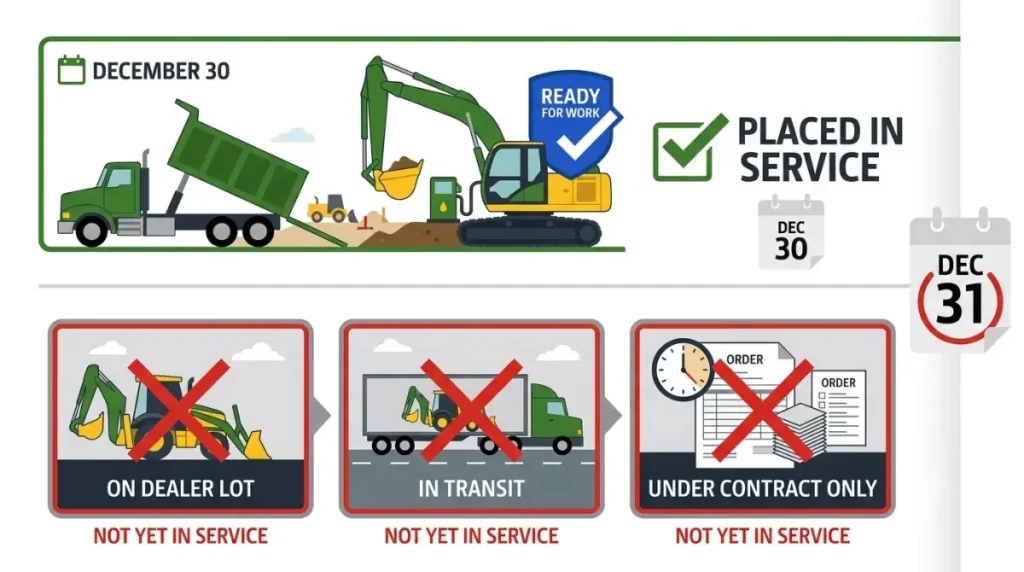
Say an excavator lands in your yard on December 31, fueled and ready, and first digs in January. That machine is generally in service in 2026. IRS guidance treats property as in service once it is ready and available, even before first use.
What doesn’t count (on order, on the lot, in transit)
- Ordered but not yet built or shipped
- Paid for but still sitting on the dealer’s lot
- On a lowboy in transit on December 31
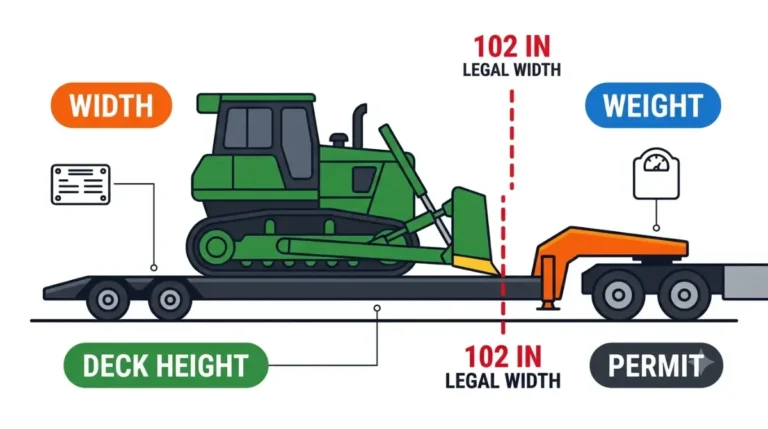
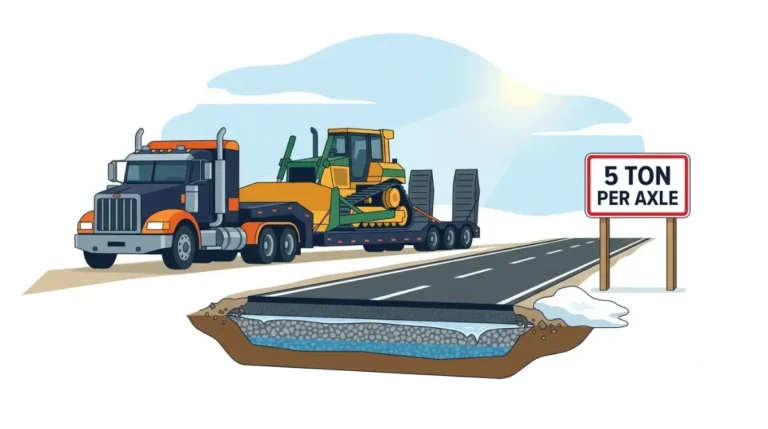
If the dealer has to deliver the machine, the haul must finish before the deadline. Permits and trailer availability take time, as what it takes to haul an 850L shows.
Records to keep
- Dated invoice or bill of sale
- Signed delivery receipt showing date and location
- Financing contract
- First job assignment for the machine
⚠️ Hazard: Dating paperwork to move a January delivery into December is a false tax position, not a timing strategy. If delivery slips, the deduction moves to the next tax year. Ask your CPA how that changes your plan before December.
Worked math: one machine vs. a fleet buy over $4.09M
| Scenario | §179 property placed in service | 2026 §179 cap after phase-out | Applies To |
|---|---|---|---|
| One machine (illustrative price, not a Deere quote) | $300,000 | $2,560,000, so the full $300,000 is eligible | TY2026 |
| Fleet buy | $5,000,000 | $2,560,000 − $910,000 = $1,650,000 | TY2026 |
| Large fleet | $6,650,000 or more | $0 | TY2026 |
Source: phase-out arithmetic from Rev. Proc. 2025-32 §4.24 figures. Verified October 17, 2026.
Single machine under the limit
At $300,000, the phase-out threshold is nowhere near in play. The full cost is eligible, subject to the income limit below.
Fleet buy: $5,000,000 placed in service
Spending $910,000 over $4,090,000 reduces the cap by the same amount, to $1,650,000. The remaining $3,350,000 may still qualify for 100% bonus depreciation (Section 5). Full figures are in the IRS’s 2026 inflation adjustments.
When income is the limit
Section 179 can’t exceed your business income. Take a $300,000 machine against $180,000 of business income: $180,000 is deductible in 2026, and the unused $120,000 carries forward rather than creating a loss.
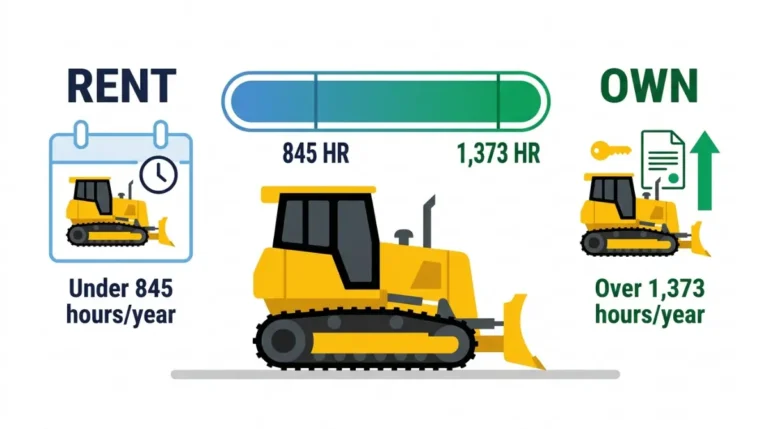
🧮 Run the Numbers: Before the tax math, confirm ownership beats renting. The Owning vs. Renting Breakeven Calculator needs the purchase price, expected annual hours and your local rental rate.
Section 179 vs. 100% bonus depreciation on heavy iron
| Feature | Section 179 | 100% bonus depreciation |
|---|---|---|
| Dollar cap (2026) | $2,560,000, phased out from $4,090,000 | None |
| Income limit | Limited to business income; excess carries forward | None; can create a loss |
| How elected | Machine by machine, any amount up to cost | Whole asset class, unless you elect out |
| Used machines | Yes, if purchased and not from a related party | Yes |
| Timing rule | Placed in service in 2026 | Acquired after Jan 19, 2025 |
Source: IRS Pub 946; P.L. 119-21 summaries; University of Kentucky extension. Verified October 17, 2026.
Income limit vs. no limit
Bonus depreciation has no income ceiling. That matters in a lean year when Section 179 would be capped by profit.
Per-machine vs. whole-class election
Section 179 can be taken on one machine and not another. Bonus applies to every asset in a class unless you elect out for that class.
The Jan 19, 2025 acquisition date
The 100% rate is permanent for property acquired after January 19, 2025.
🔍 Why It Fails: Dealer flyers printed before the 2025 law show bonus stepping down to 40% in 2025 and 20% in 2026. That schedule no longer applies to machines acquired after January 19, 2025. In a review of four Deere-dealer Section 179 pages on October 17, 2026, three still showed superseded limits or that old schedule.
Does your state follow the $2.56M Section 179?
Your state return can treat the same machine very differently from your federal return.
| Jurisdiction | §179 cap | Phase-out begins | Source |
|---|---|---|---|
| Federal | $2,560,000 | $4,090,000 | IRS Pub 946 (TY2026) |
| California | $25,000 | $200,000 | FTB 2025 Form 3885A instructions |
| Indiana | $25,000 | See Bulletin #118 | Indiana DOR Information Bulletin #118 |
| New Jersey (gross income tax) | $25,000 | See GIT-DEP worksheet | NJ GIT-DEP, revised 10/25 |
Latest published state figures, checked October 17, 2026. 2026-year state forms may not be released yet.
States capped at $25,000 (sample)
California, Indiana and New Jersey each limit the state deduction to $25,000. The difference is added back and recovered through regular depreciation.
California: worked example
Place a $300,000 machine in service. California’s $25,000 cap shrinks by the $100,000 above its $200,000 threshold, which takes it to $0. Federally, the same machine is eligible up to $300,000, per California’s Form 3885A instructions.
States that follow the federal limit
Many states follow the federal figure. Find yours in your state’s depreciation add-back instructions: Indiana’s 2025 Schedule 1, for example, has a dedicated “Section 179 expense excess add-back” line. Indiana’s treatment is in Indiana DOR Bulletin #118.
🗺️ State Check: The federal baseline is $2,560,000. Verified state caps run as low as $25,000 (CA, IN, NJ). For your state, look up the current year’s Section 179 limit in its depreciation conformity or add-back instructions, then confirm with your CPA.
Trade-ins and resale: the recapture bill later
Expensing a machine now changes what its trade-in is worth to you later.
A trade-in is now a sale
Since the 2017 tax law, an equipment trade is reported as a sale. Depreciation recapture goes on Form 4797, so a fully expensed machine’s trade-in allowance can be largely taxable. Estimate the trade value first with the Used Equipment Hour-Value Estimator.
If business use drops to 50% or less
Part of the Section 179 deduction is recaptured as income in that year, even with no sale.
✅ Do This: Give your CPA the trade-in allowance and the old machine’s depreciation history before you sign the deal.
FAQ: Section 179 on construction equipment
1. What is the Section 179 limit for 2026?
The 2026 Section 179 limit is $2,560,000, reduced dollar-for-dollar once qualifying property placed in service exceeds $4,090,000.
2. Does used construction equipment qualify for Section 179?
Yes, if you bought it and the seller isn’t a related party. Gifted or inherited machines don’t qualify. Confirm eligibility with your CPA.
3. Can I take Section 179 on a machine financed through John Deere Financial?
An installment purchase is still a purchase, so a financed machine can qualify for Section 179. Leases depend on their terms. Have your CPA classify the contract.
4. Does the machine have to be delivered by December 31?
For Section 179, the machine must be placed in service (ready and available for its job) by December 31, not just ordered or paid for.
5. What happens if I spend more than $4,090,000?
Your Section 179 cap drops a dollar for every dollar over $4,090,000 and reaches zero at $6,650,000 of qualifying property.
6. Can Section 179 create a business loss?
No. Section 179 is limited to business income, and the unused amount carries forward. Bonus depreciation has no income limit. Ask your CPA which fits.
7. Is there a special Section 179 rule for John Deere equipment?
No. Section 179 treats a Deere machine like any other qualifying construction equipment; brand and dealer financing don’t change the rules.
8. Does my state allow the full Section 179?
Not always. California, Indiana and New Jersey cap Section 179 at $25,000, far below the federal limit. Confirm your state’s current-year figure.
9. What happens to Section 179 when I trade in a machine?
A trade-in is reported as a sale, so Section 179 taken on the old machine can come back as recapture income on Form 4797.
10. What if business use drops below 50%?
If business use falls to 50% or less, part of the Section 179 deduction is recaptured as income that year. Talk to your CPA first.
Before you sign for a year-end machine
If you’re pricing a Deere unit for December, the federal number is settled. What isn’t settled is whether delivery lands in time, how your income caps the deduction, and what your state allows.
The Section 4 breakeven calculator answers the next question, whether owning beats renting, using the purchase price, expected hours and local rental rate. If the machine has to be hauled, start transport planning now with the 850L hauling guide above. The rules apply equally across Deere’s lineup in our Deere construction equipment spec reference.
The one thing to hire out: before signing, ask a CPA or enrolled agent, “What’s my federal and state first-year deduction on this machine, and what does my trade-in do to it?”
Every figure here traces to IRS, Treasury and state revenue documents, dated at verification. It reflects documented sources, not first-hand operation of the equipment described. Last verified October 17, 2026.